Language pilot courseA standalone public pilot on word history, translation, inherited type terms, and Vecnine reconstruction.
Words Before Types
Language preserves distinctions that translation and popular shorthand can collapse. This course reconstructs the nine passion terms without pretending that etymology proves a personality theory.
No prior study is required. New terms are explained when they first become useful.
Reading map
Words before type stereotypes
Passion terms carry ordinary, historical, translated, and technical ranges. Separate those layers before turning one word into a personality verdict.
Boundary. Etymology can reopen meaning; it cannot validate a psychological model by itself. Keep translation uncertainty and alternate readings visible.
Separate ordinary, source-language, etymological, and Vecnine-synthesis claims.
Learning objectives
- Separate current meaning, historical semantic range, etymology, translation lineage, source use, and Vecnine synthesis.
- Explain why a mechanism does not replace the passion word.
- Trace each type from root field through passion, semantic bridge, action vector, and regulatory goal.
- Use cross-language parallels as comparative insight without mislabeling them as Enneagram lineage.
- Correct common “it does not really mean…” explanations.
The full language stack
The received English term is only one layer. A careful entry asks what the source author wrote, in which language, what the word meant then, which translation choices narrowed or broadened it, and which later psychological ways the pattern works were attached to it.
Etymology supplies historical context. It cannot prove that an archetype exists or that a person has it. Comparative Chinese, Sanskrit, Pali, or other vocabularies can sharpen distinctions, but they must be labeled as parallels unless a historical transmission link is documented.
Evidence labels
Lineage: historically connected to the Enneagram source. Lexical evidence: evidence about a word. Interpretation: what an author does with it. the method synthesis: Vecnine’s causal placement. Comparative parallel: a useful distinction from another tradition, not proof of lineage.
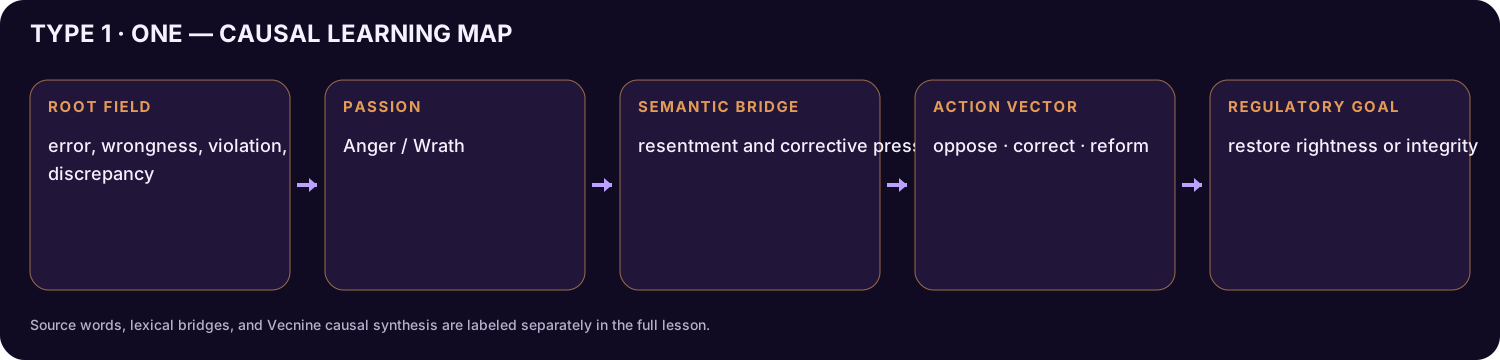
Type 1: Anger / Wrath
Root field: error, wrongness, violation, discrepancy.
Traditional passion: Anger / Wrath. Semantic bridge: resentment and corrective pressure.
The characteristic movement is oppose · correct · reform; the regulatory goal is restore rightness or integrity. This chain is an explanatory model, not a claim that every ordinary instance of the passion proves Type 1.
Retrieve before rereading
Without looking, state the Type 1 root field, passion, and one downstream operation.
A concise answer: field — error, wrongness, violation, discrepancy; passion — Anger / Wrath; downstream bridge/vector — resentment and corrective pressure / oppose · correct · reform.
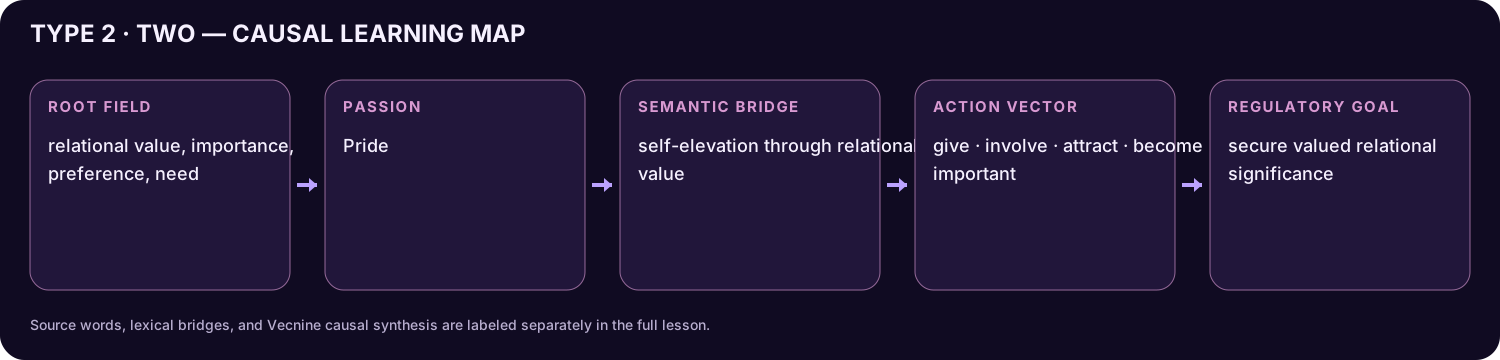
Type 2: Pride
Root field: relational value, importance, preference, need.
Traditional passion: Pride. Semantic bridge: self-elevation through relational value.
The characteristic movement is give · involve · attract · become important; the regulatory goal is secure valued relational significance. This chain is an explanatory model, not a claim that every ordinary instance of the passion proves Type 2.
Retrieve before rereading
Without looking, state the Type 2 root field, passion, and one downstream operation.
A concise answer: field — relational value, importance, preference, need; passion — Pride; downstream bridge/vector — self-elevation through relational value / give · involve · attract · become important.
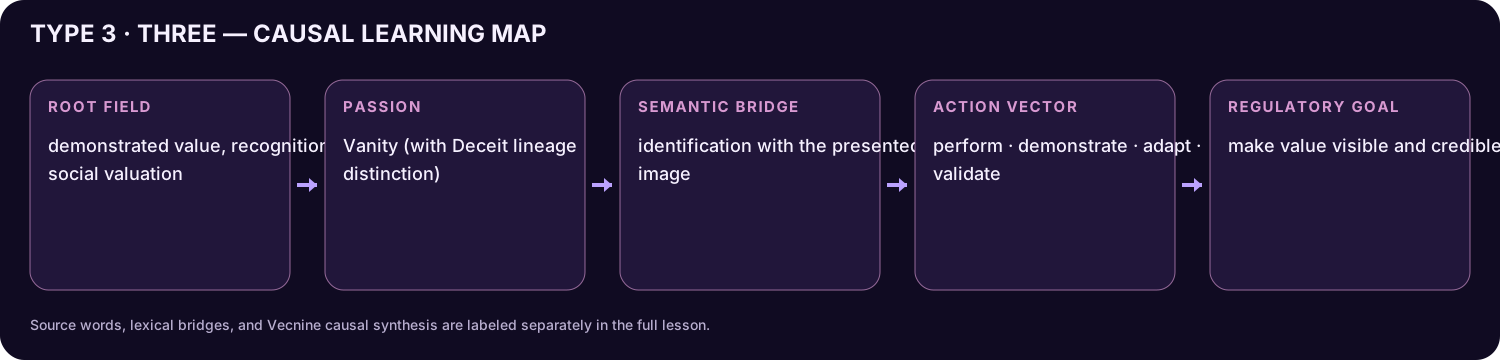
Type 3: Vanity (with Deceit lineage distinction)
Root field: demonstrated value, recognition, social valuation.
Traditional passion: Vanity (with Deceit lineage distinction). Semantic bridge: identification with the presented image.
The characteristic movement is perform · demonstrate · adapt · validate; the regulatory goal is make value visible and credible. This chain is an explanatory model, not a claim that every ordinary instance of the passion proves Type 3.
Retrieve before rereading
Without looking, state the Type 3 root field, passion, and one downstream operation.
A concise answer: field — demonstrated value, recognition, social valuation; passion — Vanity (with Deceit lineage distinction); downstream bridge/vector — identification with the presented image / perform · demonstrate · adapt · validate.
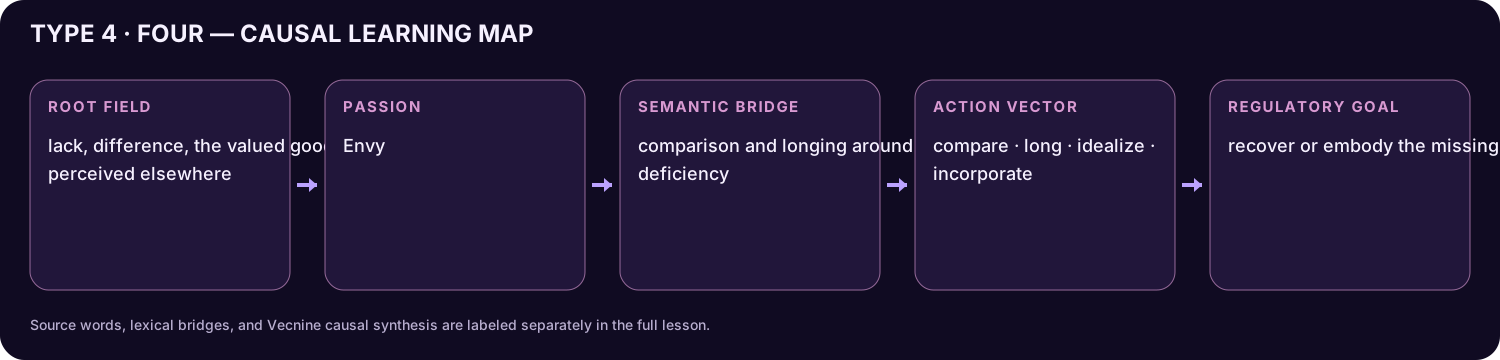
Type 4: Envy
Root field: lack, difference, the valued good perceived elsewhere.
Traditional passion: Envy. Semantic bridge: comparison and longing around felt deficiency.
The characteristic movement is compare · long · idealize · incorporate; the regulatory goal is recover or embody the missing good. This chain is an explanatory model, not a claim that every ordinary instance of the passion proves Type 4.
Retrieve before rereading
Without looking, state the Type 4 root field, passion, and one downstream operation.
A concise answer: field — lack, difference, the valued good perceived elsewhere; passion — Envy; downstream bridge/vector — comparison and longing around felt deficiency / compare · long · idealize · incorporate.
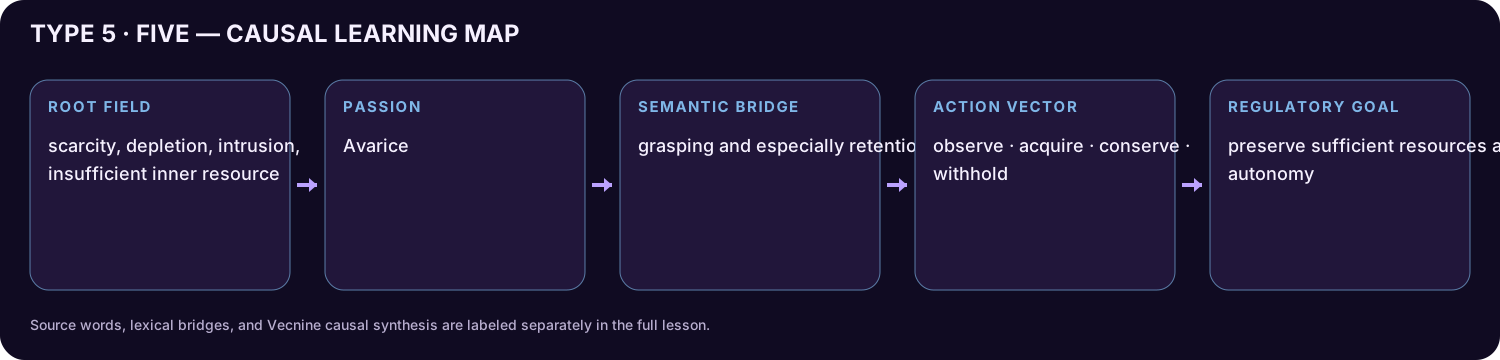
Type 5: Avarice
Root field: scarcity, depletion, intrusion, insufficient inner resource.
Traditional passion: Avarice. Semantic bridge: grasping and especially retention.
The characteristic movement is observe · acquire · conserve · withhold; the regulatory goal is preserve sufficient resources and autonomy. This chain is an explanatory model, not a claim that every ordinary instance of the passion proves Type 5.
Retrieve before rereading
Without looking, state the Type 5 root field, passion, and one downstream operation.
A concise answer: field — scarcity, depletion, intrusion, insufficient inner resource; passion — Avarice; downstream bridge/vector — grasping and especially retention / observe · acquire · conserve · withhold.
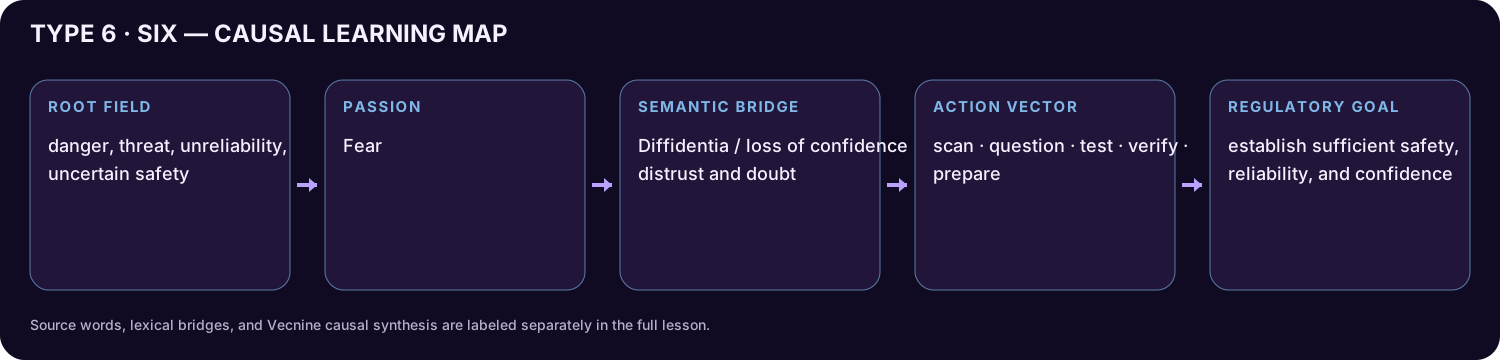
Type 6: Fear
Root field: danger, threat, unreliability, uncertain safety.
Traditional passion: Fear. Semantic bridge: Diffidentia / loss of confidence → distrust and doubt.
The characteristic movement is scan · question · test · verify · prepare; the regulatory goal is establish sufficient safety, reliability, and confidence. This chain is an explanatory model, not a claim that every ordinary instance of the passion proves Type 6.
Retrieve before rereading
Without looking, state the Type 6 root field, passion, and one downstream operation.
A concise answer: field — danger, threat, unreliability, uncertain safety; passion — Fear; downstream bridge/vector — Diffidentia / loss of confidence → distrust and doubt / scan · question · test · verify · prepare.
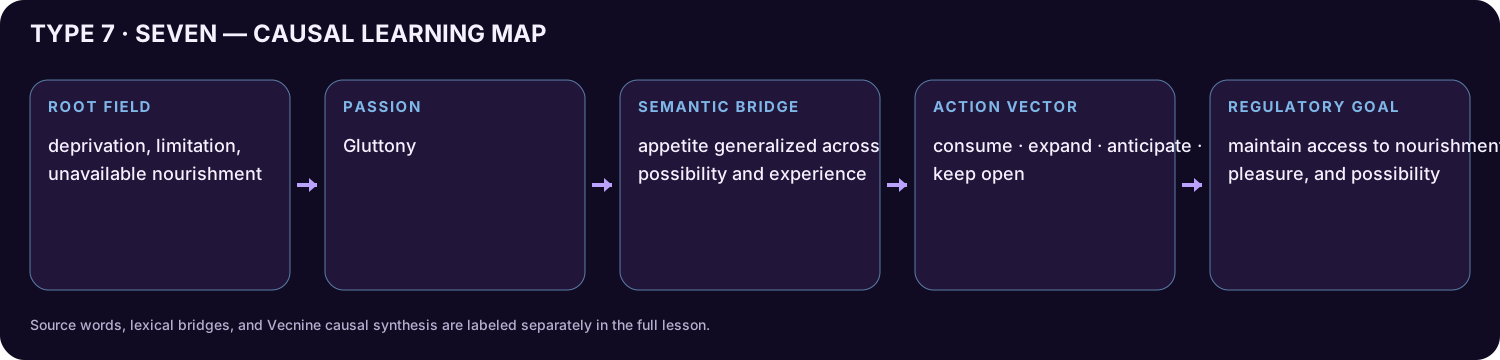
Type 7: Gluttony
Root field: deprivation, limitation, unavailable nourishment.
Traditional passion: Gluttony. Semantic bridge: appetite generalized across possibility and experience.
The characteristic movement is consume · expand · anticipate · keep open; the regulatory goal is maintain access to nourishment, pleasure, and possibility. This chain is an explanatory model, not a claim that every ordinary instance of the passion proves Type 7.
Retrieve before rereading
Without looking, state the Type 7 root field, passion, and one downstream operation.
A concise answer: field — deprivation, limitation, unavailable nourishment; passion — Gluttony; downstream bridge/vector — appetite generalized across possibility and experience / consume · expand · anticipate · keep open.
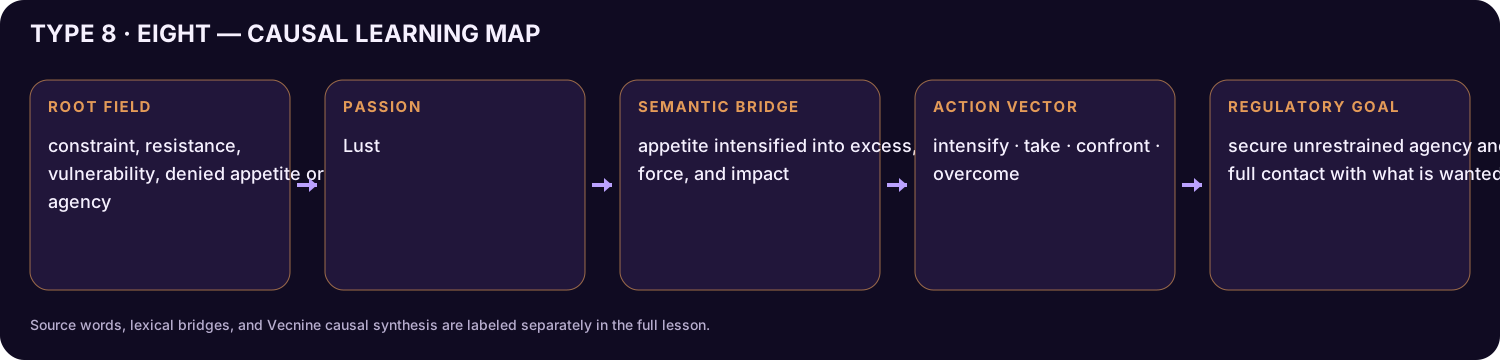
Type 8: Lust
Root field: constraint, resistance, vulnerability, denied appetite or agency.
Traditional passion: Lust. Semantic bridge: appetite intensified into excess, force, and impact.
The characteristic movement is intensify · take · confront · overcome; the regulatory goal is secure unrestrained agency and full contact with what is wanted. This chain is an explanatory model, not a claim that every ordinary instance of the passion proves Type 8.
Retrieve before rereading
Without looking, state the Type 8 root field, passion, and one downstream operation.
A concise answer: field — constraint, resistance, vulnerability, denied appetite or agency; passion — Lust; downstream bridge/vector — appetite intensified into excess, force, and impact / intensify · take · confront · overcome.
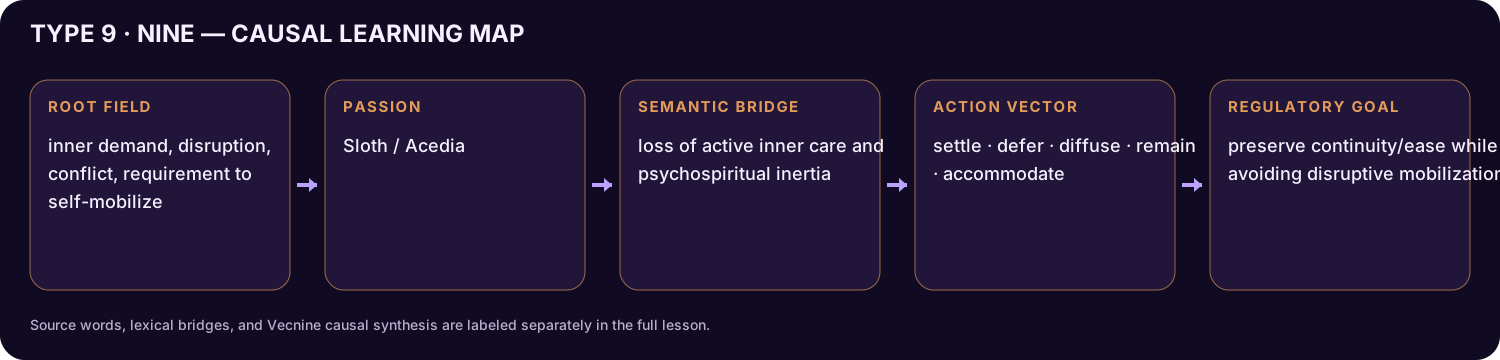
Type 9: Sloth / Acedia
Root field: inner demand, disruption, conflict, requirement to self-mobilize.
Traditional passion: Sloth / Acedia. Semantic bridge: loss of active inner care and psychospiritual inertia.
The characteristic movement is settle · defer · diffuse · remain · accommodate; the regulatory goal is preserve continuity/ease while avoiding disruptive mobilization. This chain is an explanatory model, not a claim that every ordinary instance of the passion proves Type 9.
Retrieve before rereading
Without looking, state the Type 9 root field, passion, and one downstream operation.
A concise answer: field — inner demand, disruption, conflict, requirement to self-mobilize; passion — Sloth / Acedia; downstream bridge/vector — loss of active inner care and psychospiritual inertia / settle · defer · diffuse · remain · accommodate.
Translation hazards and negative findings
A good reconstruction records what the language does not support. Spanish gula remains strongly tied to eating and drinking, so Type 7’s broader appetite should be described as Naranjo’s psychological generalization rather than as a secret dictionary definition. English lust is Germanic; Spanish lujuria and Latin vice transmission are related teaching contexts, not the etymology of the English word.
Negative findings protect Vecnine from turning attractive word histories into fabricated evidence.
From language to discernment
The final test is not whether a learner can recite nine labels. It is whether the words help explain attention, judgment, motive, and movement more precisely. A source word remains intact; the type shows how that broader human phenomenon is repeatedly organized.
Use the chain to generate competing hypotheses, then look for recurrence, breadth, automaticity, persistence, and role across contexts.
Retrieve before rereading
What is the safest one-sentence rule for the passion words?
The ordinary meaning remains possible; the archetype characteristically organizes, directs, disguises, or reinforces the broader phenomenon rather than replacing the word with a secret definition.
Practice motive-level discernment
Move from word study into contrasting cases.